One of the conveniences of Mac is that applications come in packaged files ending in .app. For this reason, they are usually said to be easy to uninstall – just delete the .app file from your applications folder and it’s gone.
True, this will get rid of most of the files, but often there’s still some application metadata gunk left laying around in hidden folders.
That’s why AppCleaner is so handy.
Drag in a .app file, and it will find all of the supporting files and allow you to delete them. This allows you to get a completely clean uninstall of an application on your mac.
Did I mention it’s free? Pick it up from FreeMacSoft using this link. Enjoy!
One of the most anticipated phones if the year is the Galaxy Nexus. It boasts a ton of new features, courtesy of Andoid 4.0.
One of Apple’s strongest points is how they release their phones. They send out an invite to an event, then at the event make a clear availability date. This causes people to get excited for the product and even line up for it.
Verizon took a different approach. They added a release date of Dec. 9 to the stores’ databases, and never made an official announcement. Everyone gets excited for that day, but Verizon has decided to stamp that down as well. Verizon took down the date from the databases and replaced it with “Launch Date Coming Soon.”
I don’t understand what Verizon is going for. Are they trying to get hype? Are they attempting to draw more in with their deadline extension? Or are the marketing people really just that clueless?
Many people have their two year upgrades coming up and would like to upgrade to the Nexus, but with so much waiting and games people are beginning to lose patience with Verizon. It’s not sure whether the phone isn’t actually going to be released on the 9th, and other sources are saying that it could be on the 13th. Who knows?
Verizon either needs to stick to the leaked dates to encourage more hype assurance or just give us a solid, set release date.
One of the most prized new features of iOS 4 and on was the ability to run many apps at the same time and switch between them easily.
One of the little issues with this is that when you close an application it stays running in the background. Normalls this wouldn’t be a problem, but contrary to popular belief is does take up a ton of battery life! By the end of the day, you could have every single one of your apps running in the background of your iPhone!
Of course you can double click the home button, tap and hold one of the app icons for a second, then hit the red circle in the top left. Then hit it again for the next app. And again. And again. And again. You’ll have to tap once for every single app that’s open.
Done yet?
Well, if you happen to be jailbroken, here’s a little tweak from cydia that will help you.
Open Cydia and search for KillBackground. Install the free package by Mathieu Bdard and respring your device.
When your phone comes back, you won’t immediately be able to tell that anything is different. But open up a few apps, then double-tap the home button. Tap and hold one of the apps for 1 second, and Voilà – You’ll see a little red crossbones icon in the bottom left. One tap and all of your apps are killed!
You can also open up your settings app and select KillBackground to configure some different options. Enjoy!
My friend Amit and I set all of the Smart Signs to GMG!
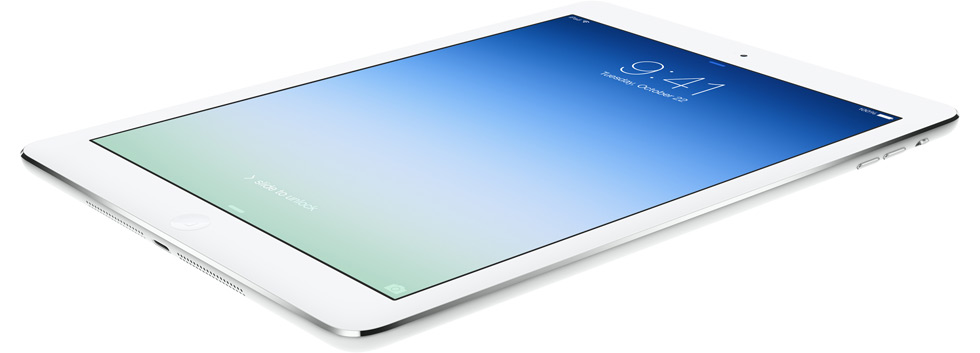
If you were recently at an Apple Store, you may have noticed their new “Smart Signs.” These are iPads that have information about the Apple product you’re looking at, however these iPads are locked in the smart sign mode. The iPad’s physical buttons are embedded into the plastic stand, and the home button has been disabled.
Sources say that there is a “secret gesture” that gets the iPads out of this mode, but after a ton of online research and asking many different Apple store employees, I still couldn’t figure it out.
So I went the easier way – I had to figure out a way to push the buttons.
I pushed as hard as I could on the edge of the iPad’s bezel, and this activated the lock button in the top right and locked the iPad. The plastic of the stand pushed against the button, so I wouldn’t be damaging any of the inside contents.
After I successfully locked the smart sign, I turned it back on and I was greeted with the lock screen. However, after unlocking the iPad I was returned to the same Smart Sign mode. Darn.
So instead of just locking it, this time I held down the bezel and got the “Slide to Power Off” slider. I swiped across, let it shut down, then held down the bezel to reboot it. (Check out the video at the end of the post for more detailed instructions.)
Tada! The iPad booted into its normal mode, and I was able to open the default applications and such. Unfortunately, the Home button is still disabled – so if you open an app, you won’t be able to get out of it without rebooting the iPad.
While we were at it, my friend/helper Amit decided to help me out and assisted me in setting every smart sign in the Apple Store to Good Morning Geek. Because the home button was disabled, the customers either had to browse my site or scroll up and find the URL bar. Also, the screens are set to never turn off – also handy!
By the time we were done, an Apple Store employee came up to us and nicely said “Would you guys please stop messing around with the smart signs?”
In the end, it was really fun. I tried to jailbreak it with jailbreakme.com, but that site is blocked – .
So if you’re ever in an Apple Store and want to either a. Annoy the employees or b. Show your friends a cool trick, this is a pretty fun and easy hack.
I hope to eventually find out the actual gesture, and after trying everything I could possibly think of, it must be fairly complicated.
Steve Jobs, Founder and CEO of Apple Inc, is dead.
He’s been very sick for a long time, and recently also stepped down from his position at Apple. He was able to turn a couple of guys in a Palo Alto Garage into the worlds largest company, with funds clocking in over the US Government’s.
Steve Jobs was a truly revolutionary man who will be remembered in the endless world of technology forever.
For this event, Apple has changed their homepage to a tribute that looks something like this.
Today, Apple announced the iPhone 4S. It’s so simple I can say it in a single sentence.
The iPhone 4S features a better camera, A5 processor, Sprint support, another antenna, and a voice assistant.
That’s it.
The better camera is 8 megapixels which is capable of recording 1080p video, and the other aspect of the new camera is an additional lens and a wider aperture.
The A5 processor is dual-core and can run things quite a bit faster.
Apple decided that the iPhone needs two antennas to make calls – one to transmit and one to receive. After all, one antenna just doesn’t seem to do quite well on other phones…?
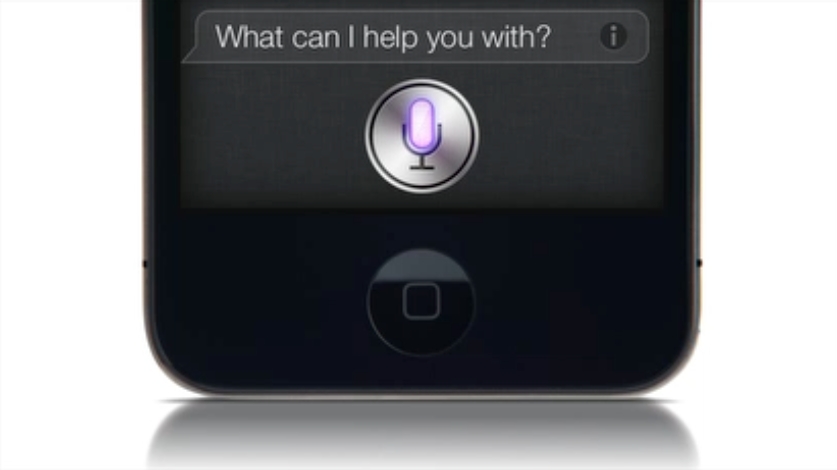
Last but not least there’s Siri. Apple bought this company a while back to create a fancy digital assistant, and my have they succeeded. Siri can understand what you say and create reminders, events, schedule meetings, move meetings, reply to text messages, find restaurants, and more with just your voice. I think it looks pretty cool – but there’s one question that I can’t seem to find the answer to: will it be available on the iPhone 4? If they only have it on the 4S it will really just be a letdown. After all, the iPhone 4′s hardware is definitely capable of handling that kind of processing pressure, and I don’t think Apple should use its software as an incentive to get the hardware.
This leads me to my next point – where’s the innovation?
With the last iOS announcement being the iPad 2, this leaves me wondering what Apple is thinking. The iPhone 4 was completely revolutionary compared to it’s predecessor. The iPad was completely revolutionary compared to it’s predecessor as well (there was no predecessor). But with the iPhone 4S and the iPad 2, I feel like Apple is having a hard time thinking of something revolutionary to release.
Everyone has been waiting for the new iPhone for quite a while now. But at the Discovery Invest Leadership Summit today, Apple board member Al Gore said that the new iPhones come out in a month.
Oddly, this all makes sense. Would Apple really skip their usual Summer update to bring us just a performance bump?
This is what I think – there is going to be a model of iPhone with a performance bump, however there will also be a new iPhone 5 that is a complete do-over.
The performance bumped iPhone 4 would most likely be called the iPhone 4S, and would sell for cheap – $99-$150 ish. Then, there would be the long-anticipated iPhone 5 for the usual price of $199-$299 with the complete reinvention thing going on.
That’s the interpretive, bright side of this quote.
However, we don’t really know Al Gore’s actual perspective. It’s possible that he could have accidentally added an S to the end of iPhone, and/or it was just amplified by the sound system. It’s also possible that he meant next iPhones as there will be one model of new iPhone, but MANY will be sold.
The one thing that couldn’t have been a mistake is the fact that he said “next month.” That means October – So for those of you who have been waiting months and months for the next iPhone, it will be coming next month – whether it has an extra model or not.
Instagram is an amazing iPhone application that can transform your normal iPhone photos into interesting, old-ish photos. Unfortunately, your iPhone doesn’t have the best camera that you could put your hands on.
Here’s two applications that will give you Instagram-like photo effects and filters, but you can supply your DSLR’s pictures!
Focus
Focus is an application available from the Mac App Store for $5. The app basically allows you to add tilt-shift effects to your photo. It’s a very straightforward application, and I think I can basically sum up the controls in this screenshot.
First, open a picture in the app. Then, click “Place” in the bottom left corner. This will allow you to rotate, crop, and align your photo to your liking. Then, click on one of the options that are shown. I personally don’t understand why they had to add a bunch of options – I mean, why couldn’t they have just added a button for circular, a button for linear, and a slider for Vividness? The world may never know.
After you’ve selected one of those options, you can click and drag the focused area around and rotate it to your liking. Once you have it in a place you like, hit File > Export and save it as a JPEG. Now you have a tilt-shifty photo!
Lomo Express
Now that we have the tilt-shifty part of your photo complete, we need to add some filters. This will be done with another app from the Mac App Store that is available for a painful $13 – worth it I think so.
This is as bare-bones as you can make this application, as you open up your photo then choose what effect you want – then save it. Here’s what the app looks like:
There are 12 awesome filters to choose from, and it’s as easy as clicking on the one you’d like and bam, there’s your new photo.
When you’re done and you like the results, go to File > Save As and save it as a JPEG.
That’s it!
Conclusion
Your final picture will look like an instagram shot, but higher quality and resolution!
To go even farther, you can print them out on nice paper and post them around, like I did with instagram photos in this post.
Even though this will cost you $19, if you’re really into editing photos with tilt-shift and Lomo effects, this is the way to do it!
The iPhone can take some pretty dang good pictures. In fact, many different phones can take mind-blowing shots. But your little phone can do even more if you treat it to these mini-lenses from Photojojo!
Contents/Installation
There are three lenses available from Photojojo: 2X telephoto, 180 Fisheye, and a 0.68x wide/macro lens. I won’t go over individual pricing, but the whole pack is $50.
Installing the lenses is painless. In your package you’ll get a few tiny, metal magnetic rings. Undo the plastic on the adhesive side and stick it around the lens of your device. If you have an iPhone, however, you should probably put the ring on a case; the sleek glass doesn’t play well with their adhesive.
Now to use the lenses, you just attach the lens to the metal ring and it magnetically locks on. Neat!
2x Telephoto
For those times when you want to get closer to your subject, the 2x telephoto lens will do exactly what you’d expect. Unfortunately it will cause a tiny bit of distortion, but not enough to make a big difference.
Without, With
As you can tell by that comparison, the lens does a nice job of zooming in, but has a bit of distortion (visible near the door handle).
Fisheye
This lens I believe is my favorite. It can capture just about everything you can see without turning your head. If you want to really capture an entire scene, this is exactly what you need.
Without, With
Pretty cool, right? Unfortunately, this lens causes a particularly noticeable amount of vignetting, but I think that it adds a nice effect. If you want to get rid of it, you can always crop it with whatever application you desire, however you’ll end up losing a bit of the image.
Wide Angle / Macro
This lens confuses a lot of people. Is it wide angle or is it macro?!
Alone, the magnetic part of the lens is just Macro. However, there’s an adaptor that screws in to the macro lens to convert it to a wide angle lens.
The macro lens doesn’t zoom in at all. It just allows you to focus WAY closer to objects. Here’s a comparison – remember, I took the first picture as close as I could while staying in focus, then I took the second as close as I could while staying in focus. This lens does NOT zoom.
Without, With
Pretty cool, right? You can get ridiculously close to capture textures that previously went unnoticed. On the second picture, I’m holding my iPhone a tiny bit less than an inch away from the keyboard.
The wide angle addition to this lens isn’t very fancy, it just makes the picture a tiny bit wider. It will cause some straight lines to bend in odd ways, but it still comes in handy when wanting to capture wide shots without going crazy with the fisheye.
Without, With
Doesn’t that doorway look kind of round? As you can tell, it makes the picture a bit wider but can’t capture the amount (and distortion) of the wide angle lens.
Cool uses
Yup, these work great with a phone camera. But there’s one use that I recently found – your webcam! It’s a small camera, just about as small as the one in an iPhone. Take a metal ring and stick it around, and you can use these lenses while video chatting! I personally have an LED cinema display, and although it makes my screen look a little funny, the results are totally worth it.
Here’s the display:
Ha! By the way, those things on top of my monitor are dinosaurs; you’ll get one with every photojojo order! I’ve ordered two things from Photojojo, so that’s why I have two dinosaurs.
Here’s what it looks like straight on:
Pretty cool, right?
Here’s the results:
Sweet! You can even see my keyboard!
Conclusion
These lenses are quite handy, and because they work with anything you don’t have to worry about compatibility. The whole set of lenses is $50, and if you’re interested click here to be redirected to the photojojo store!
OS X Lion removes the need for any kind of media for the installation. That’s nice, because there’s no disk for you to lose!
However, if something terrible happens to your computer, you’ll end up installing Snow Leopard, then upgrading to Lion once again. Thankfully, Apple has made a utility that allows us to easily and painlessly create a bootable USB Lion Recovery Disk. Unfortunately, you must have either the MacBook Air or Mac Mini Mid 2011 for this to work. This is because those are (currently) the only computers with the Lion Recovery Partition.
1. Download
Click here to download the Recovery Disk Assistant from Apple. Once downloaded, open the Disk Image and launch the Application.
2. Create
Now would be a good time to plug in a USB disk. Plug it in and continue through the installation. There’s nothing for you to configure, so this is extremely straightforward.
3. Use
If your computer stops booting, or you get a new hard drive, it’s time to use this disk. Plug it in to a slot on your computer, then boot holding the alt/option key. In the menu that appears, select the recovery disk. Now you can download and install Lion right back on to your computer!
The MacBook Air is a great computer. However, sometimes it’s nice to have a bigger display. That’s an easy task if you have an external monitor.
Okay, so now you have two displays. Cool! The only problem with this is that it can sometimes be confusing and/or distracting to deal with two displays at a time. Okay, simple enough, just close the lid to the MacBook Air and use an external keyboard and mouse. That was easy.
This would be the answer to all of our problems, however a closed computer does take up quite an amount of valuable desk real-estate. That’s why the BookArc is here to save us.
As you can tell, it is really just a stand for the Air that holds it up sideways. The stand is made of solid aluminum, and has rubber inside so that you don’t scratch or in any way damage your beloved MacBook Air. It also has a small indent in the side to manage any cables you might have, and was designed to fit the cable from an LED Cinema/Thunderbolt Display quite well.
This saves a ton of desk real estate, and can really come in handy. But the fun doesn’t stop there!
Usually laptop cooling requires some fancy advanced stand that usually doesn’t even work well. Well, here’s my personal cooling system.
Yeah, that’s it. I have the MacBook Air and a desk fan pointed at the bottom. This will keep your Mac nice and cool, so you won’t have to worry about heating issues ever again. Nifty!
The BookArc is a simple, elegant stand that serves its purpose quite nicely. If this stand were any more, it would be too complicated and much less attractive. It saves you a ton of desk real estate, and at the same time you can cool down your computer!
As you may have read in a previous post, my beloved MacBook of three years has finally bit the dust. That MacBook treated me well, and with an SSD and upgraded RAM it was able to work wonders.
Now, however, it is time to move on. And as you may be able to tell by the title, I have decided to continue my Mac collection with the newfangled MacBook Air.
Which one did you get?
One of the big reasons I wanted the MacBook Air was because of its portability and the offering of an 11 inch version. Due to this, I got the 11 inch MacBook Air with a 1.8 ghz Core i7, 256GB flash storage, and 4GB of ram.
I can hear a lot of you saying “Isn’t 11 inches a little small?” Why yes, it is. However, when I’m at home, I have an LED Cinema Display to hook it up to – no lack of pixels over here.
Design
The design of the MacBook Air does NOT fail to amaze. It feels so thin and light in your hands, but at the same time it feels incredibly solid. Because it’s a “unibody” MacBook, it was manufactured from one single piece of aluminum – it’s strong. Tapering from 0.68 inches down to 0.11 inches, you can bet your bank account it’s thin. Thanks to this, I can finally accomplish my dream of slipping my computer into a manilla envelope. The one problem with this pencil-thin design, however, is that on the whole computer you get a total of five ports. On the left side, we have a MagSafe power adapter, USB port, and microphone/headphone jack. On the right side we have a thunderbolt port and a USB port. Sorry, disc lovers!
Upon opening the computer, you get some more goodies.
The first thing you’ll notice is the screen. It’s bright and, well, beautiful. It packs a very nice DPI, featuring a 1366 by 768 resolution squeezed into 11.6 inches of glossy glory.
Next, you’ll notice the keyboard. The keyboard is full-size, featuring every key you’ll find on that thick MacBook Pro. In addition to being full-size, the keyboard is also backlit – a feature that was definitely missed on the previous version of MacBook Air.
The next thing you’ll notice is the giant trackpad. This trackpad resembles that of the MacBook Pro, although on the 11 inch version of the MacBook Air it’s a tiny bit thinner. The glass surface is a cinch to move your fingers across, and is extremely responsive to say the least.
Last and, well, least, would be the FaceTime camera embedded in the bezel of the screen. Apple decided not to put in one of the new FaceTime HD cameras, and will probably bring it back in the next version of the MacBook Air. Nonetheless, it’s still a standard functional webcam that is definitely a good addition.
Performance
In addition to being quite the looker, it gets a high score in the area of performance as well. As far as processing goes, the 1.8ghz hyper threaded dual-core i7 works wonders. The 256GB SSD performs at ~250mbps Read/Write speeds. The 4GB of RAM is sufficient.
For comparison, I’ll test the performance of the Air versus a pro using Geekbench. I first ran it on my mother’s MacBook Pro (Late 2009), which features an intel Core 2 Duo and 8GB of ram. It scored a Geekbench score of 3002. Not bad.
Then I ran it on the Air. It scored a whopping 5200 – which is a 70% increase from the pro, in 30% of the space.
The one setback of the Air’s performance would be graphics. It’s running an Intel HD 3000 chip, which is integrated so it doesn’t boast the same performance that you might get with an nvidia card. Although it might not be on par with an nvidia, it’s still a perfectly good graphics card nonetheless.
Watch out!
If you’re thinking of buying one of these, there’s one thing that you might be at risk of. The SSDs in the Airs are provided both from Toshiba and Samsung. This would be no problem, however the Toshiba SSDs are about 100MBPS less than the Samsungs. Yeah, that’s a big difference.
Here’s a video to find out if your Air boasts a samsung or a toshiba:
Conclusion
The MacBook Air combines the two most wanted/needed components of a notebook computer: power and portability. The powerful processors and fast memory give it some meaty specs, and then the 0.68 to 0.11 inch body makes it a lean, mean, working machine. I definitely recommend this computer to everyone, whether you’re a professional video producer or an under-appreciated artist living in a college dorm.